Rapid establishment of a COVID-19 biobank receives funding boost from West Midlands Clinical Research Network
Recognising the transformative potential of biobanks for understanding disease pathophysiology, the Biochemistry and Immunology department within pathology initiated in March 2020 storage of clinical samples from COVID patients.
This was used to support introduction of new methods around COVID-19 biomarkers in the laboratory. Ethical approval and support through Arden Tissue Bank was obtained to continue, thus providing a biobank for future collaborative research efforts.
As a result of the strategies employed, over 13,000 samples have been stored so far from over 3500 patients, with numbers continuing to rise. Clinical information has been sourced including; ethnicity, co-morbidities, ventilation, and patient outcome. This has enabled grouping of patients based on disease severity. Since multiple samples from single patients were saved, this has allowed for disease trajectory focused projects. Not only is this unique biobank providing samples for Trust-led research, through Arden Tissue Bank, samples can be supplied to academic, commercial and charity organisations - both nationally and internationally.
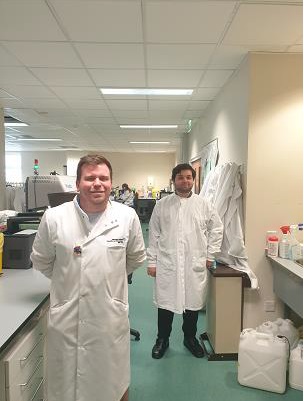
Following a competitive two-stage application and interview process for the West Midlands Clinical Research Network’s (WM CRN) Strategic Funding for Improvement and Innovation in Research, a funding of £97,000 was awarded to further support the consolidation of COVID biobank and expansion into a WM-wide resource in collaboration with Black Country Pathology, UHB, and UH North Midlands. Project Lead, Dimitris Grammatopoulos and UHCW team aim to use their expertise in setting up and managing this multi-partner biobank modelling the UK biobank concept to develop a regional approach to the sharing of bio-samples and data related to COVID-19 patients.
Ref: Braybrook E, Anderson N, Grammatopoulos D194 Rapid establishment of a COVID-19 biobank at University Hospital Coventry and Warwickshire (UHCW)BMJ Leader 2020;4:A73.