Blood Transfusion
This section should provide you with all the information you need so you can utilise your local Blood Transfusion Laboratory service.
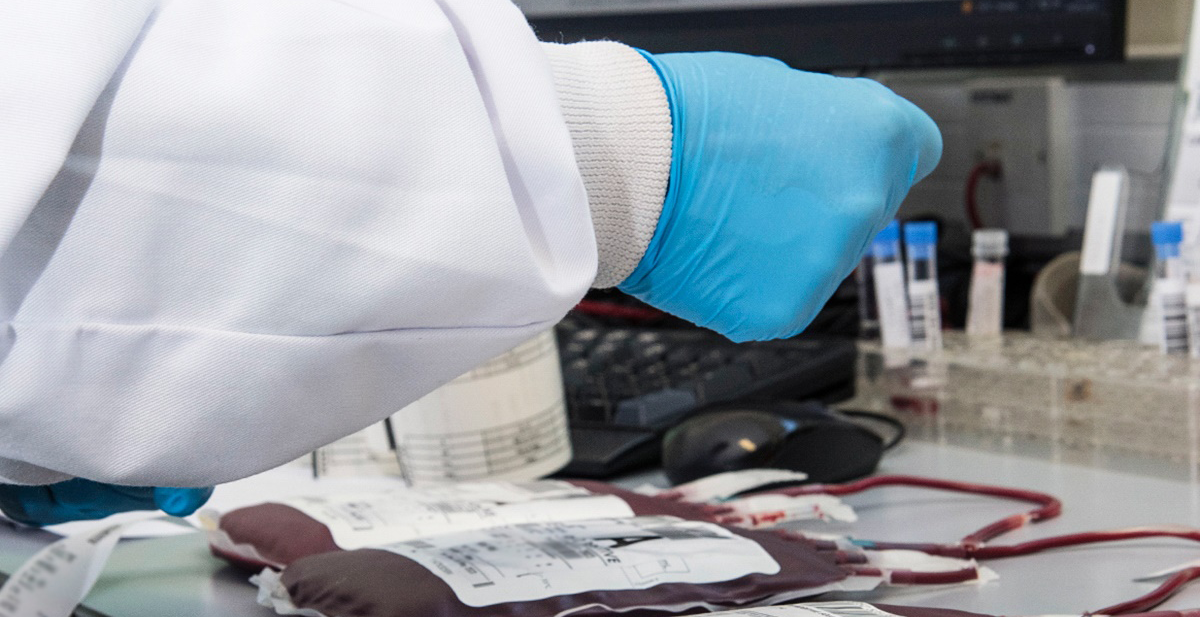
Within the Coventry and Warwickshire Pathology Services (CWPS) there are Blood Transfusion Laboratories situated in all 3 Trusts.
Blood Transfusion is aiming to work to the same policies and procedures across the Pathology Network; however, there may be some site specific differences. This section will, where possible sign post you to those differences.
For more information on the principles of transfusion applicable in your own Trust, please refer to your local ‘Administration of Blood and its Components Policy’.
For national transfusion guidelines and advice see The Handbook of Transfusion Medicine www.transfusionguidelines.org.uk.
For more information on the general principles of ‘Collecting Blood from the Blood Fridge’ refer to your local trust policies.
If a patient is known to have atypical blood group antibodies, provision of blood will be delayed. Patients with rare and/or multiple antibodies may need to be referred to the National Health Service Blood and Transplant (NHSBT). Please contact your local Blood Transfusion Laboratory for advice.
Emergency Blood (Immediately Available): O RhD Negative blood is available immediately for clinical emergencies. Telephone your Trust’s Blood Transfusion Laboratory ASAP if emergency blood is required. See appendix 1, 2, or 3 for contact numbers.
In clinical emergencies when blood is required in less than 20 minutes, uncross-matched O RhD Negative blood is available for immediate use from blood refrigerators at:
UHCW
| Blood Transfusion Laboratory, Fourth floor, West wing | 8 units |
| Maternity: Obstetric Theatres, First Floor | 2 units +1 Paed Pack |
| Central Theatres, First Floor | 4 units |
| Emergency Department, First Floor | 4 units |
BMI Hospital
On the UHCW site, Theatre suite, first floor - 2 Units
Rugby St Cross Hospital
Located opposite Cedar Ward at the Hospital of St Cross, Rugby :
23159 - 6 Units
GEH
In situations when blood is required in less than 15-20 minutes, uncrossmatched O Rh D Negative blood is available for immediate use from refrigerators at:
Phase III Theatre Calibration room - 4 Units
Maternity - Labour Suite - 2 Units
SWUFT
In situations when blood is required in less than 15-20 minutes, uncrossmatched O Rh D Negative blood is available for immediate use from refrigerators at:
Blood Sciences Laboratory Issue Fridge - 4 Units
Telephone all urgent requests to the local Blood Transfusion Laboratory. If a request is urgent from the outset, ensure you tick ‘Emergency’ on the Transfusion Request Form. In addition ensure the sample and Transfusion Request Form has been completed as per Trust policy.
If a cross-match or group and save becomes an urgent request a telephone call to the Blood Transfusion laboratory is critical. Once a request has been given priority status a full serological cross-match can take approximately 60 minutes from sample arrival to completion providing their antibody status is negative.
If the patient has no record of any antibodies and two antibody-negative ‘Group & Save’ samples taken at different times have been received from a patient, then they may be suitable to have blood issued by electronic issue’. This means that blood can be issued without a cross-match; and, this can be made available within 10-15 minutes of telephone request depending on the workload in Blood Transfusion Laboratory at the time of the request (Providing the group and save has been completed).
To check if a patient is suitable, you should ring local Blood Transfusion Laboratory. If a patient is suitable for electronic issue, then blood may not need to be issued pre-operatively, as you can call your Blood Transfusion Laboratory when it is required.
Samples and requests for blood/products should normally arrive at the laboratory 48 hours prior to the time of the transfusion and routine requests for blood should be made by 3pm on the day before elective procedures.
For patients with antibodies, the request and sample should arrive between 72 and 48 hours before the planned transfusion.
MSBOS is a table of elective surgical procedures, which lists the maximum number of units of blood that should be routinely requested for each procedure. It is important that the name of the operation, as specified on the MSBOS is given, when ordering blood. Please refer to your local MSBOS for further information. If you wish to request more units than specified in the MSBOS, the clinical reason must be shared on the request form.
The MSBOS is agreed locally by the Hospital Transfusion Committee. This schedule will be reviewed periodically, and appropriate adjustments will be made to the schedule. Please refer to the site specific MSBOS.
5.1 The HTPs are the link between the laboratory and users of blood in the clinical areas of the Trusts. Their role includes monitoring blood usage and wastage; training and competency assessments of all clinical staff involved in the transfusion process; and, developing and revising transfusion related policies.
5.2 Blood Transfusion training is a mandatory requirement and Trusts should provide regular (Annual) documented training for all staff involved in the transfusion process. It is also a requirement for these staff to be competency assessment every 2/3 years.
Please refer to your Trusts local Mandatory Training Policy for information on how this training will be delivered in your Trust. If you are still unsure, contact your HTP.
6.1 Sample type and volumes required:
To adhere to national guidelines, patient details must be hand written on the sample.
Sticky addressograph labels ON SAMPLES must NOT be used and WILL be rejected.
Do NOT pre label tubes by writing on them in advance of taking the sample.
|
Test |
Sample Type UHCW/GEH/SWFT/UHDB |
|
Group and Save / Cross match |
6ml EDTA Tube |
|
Kleihauer |
4ml EDTA Tube |
|
Direct Coombs test |
4ml EDTA Tube |
|
Antenatal serology |
6ml EDTA Tube |
|
Cold agglutinins Authorisation for tests required by Consultant Haematologist. Samples sent to NHSBT for analysis |
4ml EDTA Tube |
|
Red Cell Serology NHSBT (Positive antibody screens) |
3 x 6ml EDTA tubes |
Request Form and sample labelling
In order to prevent serious blood transfusion incidents due to mis-identification of samples, the Blood Transfusion Laboratory will reject samples if the following national guidance is not strictly adhered to:
The Request Form MUST contain the following patient identification details:
(Banda label/addressograph labels are only acceptable on request forms.)
- Surname (in full, correctly spelt and in the correct position)
- Forename (in full, correctly spelt and in the correct position)
- Date of birth (not age or year of birth)
- Hospital number or NHS number or major incident number
(UHCW: NHS number is only acceptable for requests from GP’s/CRM) - Gender (and/or on the specimen)
- Collector’s details
- Name/Signature of requesting medical officer
In addition: When ordering blood products please provide the following information on the request form or during the phone call made to the Blood Transfusion Laboratory
- reason for the request
- what type(s) of blood components are required
- the number of units, or the volume of blood required
- any special requirements, e.g. irradiated, CMV negative, Sickle-ve, Rh/Kell compatible
- time/location needed and urgency
The Sample MUST have the following details handwritten on it:
The Sample MUST have the following details handwritten on it:
(Banda label/addressograph labels are NOT acceptable on samples for Blood Transfusion)
- Surname (in full, correctly spelt and in the correct position)
- Forename (in full, correctly spelt and in the correct position)
- Date of birth (not age or year of birth)
- Hospital number or NHS number or major incident number. If the NHS number has been used on the sample, this is acceptable providing both the NHS number and hospital number of the patient are on the request form. (NOTE: At UHCW NHS number is only acceptable from GP’s/CRM)
- Gender (and/or on the request form)
- Collector’s details
- Date and Time specimen collected
There will be no exceptions to this, and when a sample is rejected the patient will have to be bled again, and the new sample sent to the laboratory with a new form.
Cross-match Sample Validity
Each sample taken has a finite Sample validity which is calculated using the date and time when the sample is taken; and, when the patient was last transfused.
Planned Transfusions:
Patients will need to have 2 samples before blood is issued. The 1st sample gives a baseline blood group (Taken anytime in the past). Second; and subsequent, samples confirm the blood group and must be completed prior to the issue of blood.
As a consequence of taking 2 samples more patients will be eligible for electronic issue; therefore allowing the quicker issue of compatible blood.on the sites where this is available
The number of days for which a cross-match sample is valid is dependent on when the patient was last transfused. This reflects the time taken for red cell antibodies to develop after a blood transfusion. The planned transfusion must be started before the sample validity expires. The schedule is summarised in the following table:
Sample Validity for the second sample:
The 2nd sample requirement will not be enforced in an clinical emergency situation, however a second sample should be sent ASAP to confirm the blood group.
| PERIOD SAMPLE IS VALID FOR RED CELL ISSUE* | TRANSFUSION HISTORY | |
| 72 HOURS | Pregnant | |
| Transfused in last 3 months | ||
| 7 DAYS |
|
|
|
||
|
||
| 28 DAYS |
|
*From the time and date the sample is taken.
If in doubt please ring the local Blood Transfusion Laboratory
The successful treatment of massive haemorrhage depends on early recognition; linked with the timely issue of blood and blood products, prompt action, good communication and the involvement of senior clinicians with the necessary expertise.
Please refer to the local Trust policies for Massive Haemorrhage.
Transfusion reactions can range from mild and minor complications, which can be alleviated with the use of drugs, to severe life threatening complications and even death. It is often difficult to distinguish which type of reaction is taking place as the initial signs and symptoms of the reactions are very similar. It is essential to begin investigation of a suspected reaction immediately to prevent the continuation of a potentially fatal transfusion e.g. ABO incompatibility. The time taken to complete all investigations will depend on the clinical emergency and the nature of the reaction. Please refer to your Trust ‘Administration of Blood and its Components Policy’.
External reporting – SHOT/SABRE
All transfusion laboratories are legally obliged to report Serious Adverse Reactions (SAR) and Serious Adverse Events (SAE) to the ‘Medicines and Healthcare Products Regulatory Agency’ (MHRA) and/or ‘Serious Hazards of Transfusion’ (SHOT) via the Serious and Adverse Blood Related Events reporting system (SABRE).
Following the event if you believe your patient has had a reportable reaction to a blood component please report this to your local Blood Transfusion Laboratory or local Transfusion Practitioner immediately; and, raise a CAE on the Datix system (within 24hrs). The reaction will be investigated by both parties and the necessary reports made to SABRE and/or SHOT.
The following has been identified as externally reportable:
- Incorrect /inappropriate blood component transfused
- Avoidable unnecessary or delayed transfusions
- Handling and storage errors
- Near miss events
- Acute Transfusion Reaction
- Acute and Delayed Haemolytic Transfusion Reaction
- Transfusion Related Acute Lung Injury
- Post Transfusion Purpura
- Transfusion-associated Graft-versus-Host Disease
- Transfusion Transmitted Infections
- Anti-D anomalies
- Transfusion-associated Circulatory Overload
- Cell salvage adverse events
- Transfusions which have taken > 5 hours to transfuse
- Wrong Blood In Tube (WBIT)
- Transcription errors with mother and baby samples
Further information regarding reporting can be found on the following website:
https://www.gov.uk/guidance/blood-authorisations-and-safety-reporting
Other Investigations provided via the Blood Transfusion Laboratory:
- NHSBT provides a reference service for the identification and quantitation of antibodies and is also closely involved in the provision of blood for patients with complicated red cell antibodies. If a patient has antibodies and the request has been referred to NHSBT the blood may not be available for up to 3 days. Please ensure you contact your Blood Transfusion Laboratory to check blood availability. NHSBT will only perform cross-matches out of hours in a clinical emergency.
- Leucocyte and platelet antibody investigations are also provided by NHSBT.
- HLA and tissue typing is also provided by NHSBT. For further information please see the H&I user guide: https://hospital.blood.co.uk/diagnostic-services/user-guides/
The purpose is to prevent exposure of patients to potentially dangerous or defective blood components by removing the products from use and rendering such units unavailable for subsequent issue. Clinical review of the patient will be required if the unit has already been transfused. Clinical action may be required, e.g. if microbiological contamination of the blood component is suspected.
The Recall procedure may be activated by the laboratory for two reasons:
- When an internal error has been detected that brings into question the suitability of a product or products which have already been issued
- When instructed to do so by NHSBT.
References
- Handbook of Transfusion Medicine www.transfusionguidelines.org.uk
- SABRE - ‘User guide for mandatory Haemovigilance reporting in the UK’ https://www.shotuk.org/reporting/
- UK Blood Safety and Quality Regulations (BSQR) 2005 as amended.